Amiculum Blog Article
A simplified three-step process for achieving the fundamentals of omnichannel engagement in pharma: how to deliver impactful, connected experiences
A simplified three-step process for achieving the fundamentals of omnichannel engagement in pharma: how to deliver impactful, connected experiences
A simplified three-step process for achieving the fundamentals of omnichannel engagement in pharma: how to deliver impactful, connected experiences
A simplified three-step process for achieving the fundamentals of omnichannel engagement in pharma: how to deliver impactful, connected experiences
Key takeaway: Omnichannel in pharma does not need to be complex to be effective. This blog outlines a practical three‑step framework that helps teams move from concept to execution by focusing on a clear campaign narrative, stakeholder‑led planning, and a coordinated journey across touch points.
At the end of last year, we wrote a piece on artificial intelligence (AI) persona generation and the conceptual hurdle teams face when trying to make omnichannel communications a reality. This got us thinking: what if we could create a simple stepwise process that teams could follow to start implementing omnichannel communications quickly and efficiently?
We put our heads together and devised this process, which breaks down omnichannel engagement into a simple, practical framework based on real-world programmes so that you can design and deliver campaigns that actually work rather than trying to implement change all at once. It draws on the experience of our specialists, who have been bringing omnichannel to life for many pharma teams and who can do the same for you.
What is omnichannel in pharma? A simple definition
For those of you who already know what omnichannel is but just haven’t utilized it, skip to step 1 to start developing your strategy. If you don’t know what omnichannel is or need a refresher, in pharma, omnichannel engagement means using “integrated data to deliver personalized experiences across channels, including content that resonates with customers and drives engagement.”1
Unlike multichannel (which pushes the same content across many platforms), omnichannel takes a more thoughtful approach, “connecting every communication channel into one seamless journey.”2
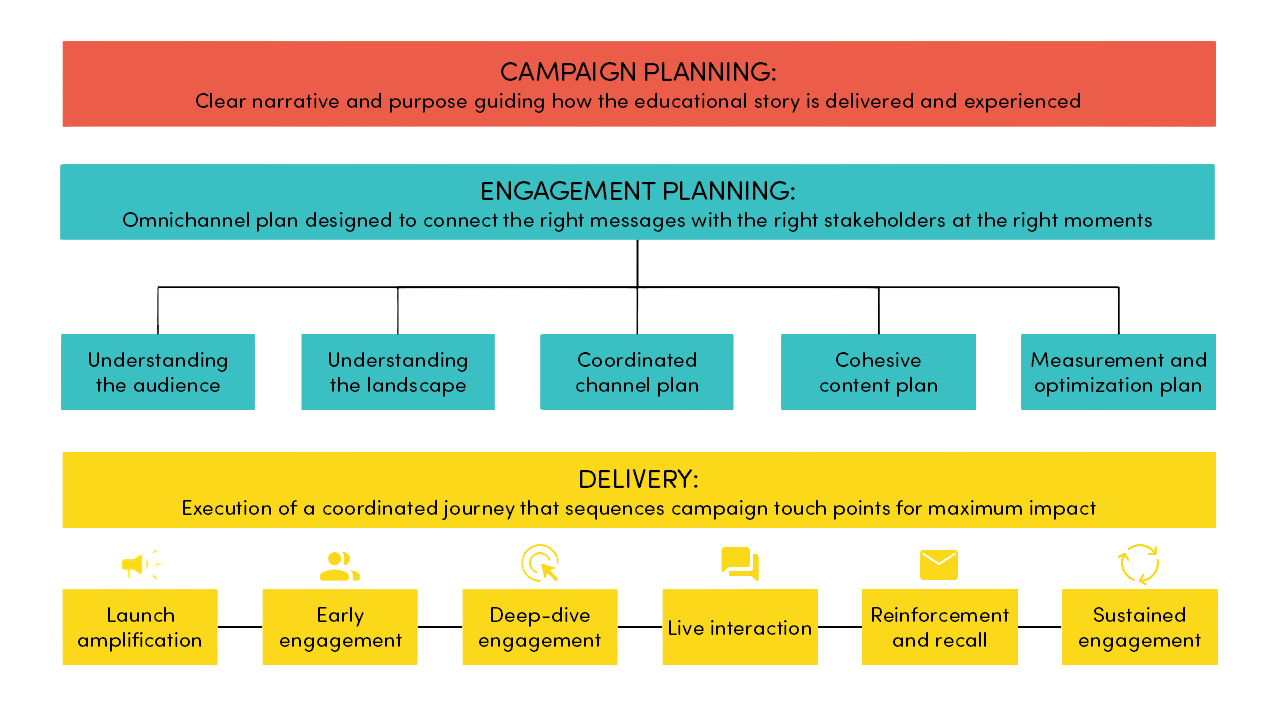
Step 1: build a clear campaign narrative
Every successful omnichannel campaign begins with a strong narrative. This narrative defines:
- What story you need to tell
- Why it matters
- How each person (healthcare professional [HCP], patient, payer, caregiver) should experience it
A clear narrative ensures that every touch point, from a symposium to an email, reinforces the same core purpose.
Step 2: plan engagement around stakeholder needs
Pharma omnichannel planning should start with understanding:
- Your audience: What do they care about? How do they prefer to learn?
- The landscape: What content already exists? What are competitors doing? Where are the gaps?
- Your channels: Which channels are essential? Which ones help our audience understand, remember and trust our messages and behaviours? Which ones should be activated now versus later?
- Your content: What formats will have the most impact (videos, infographics, web tools, live meetings, bite-sized updates)?
- Your measurement plan: What key performance indicators and metrics matter with regards to your campaign objective: reach, engagement, dwell time, sentiment, referrals, action?
This foundational planning ensures that you don’t create ‘random acts of content’ but, instead, build a connected experience.
Step 3: execute a coordinated touch-point journey
An omnichannel campaign is not a collection of tactics; it’s a sequenced journey.
Here’s a simplified example of an HCP journey after campaign launch:
- Launch amplification: Build awareness through societies, key partners, targeted ads and coordinated digital rollout.
- Early engagement: Introduce core concepts with short, accessible content to spark interest.
- Deep-dive engagement: Offer structured educational assets (webinars, videos, infographics, chaptered content).
- Live interaction: Deliver meaningful moments through F2F encounters, symposia, expert Q&A or virtual workshops.
- Reinforcement and recall: Publish follow-up microcontent, case examples, practical tools and reminders.
- Sustained engagement: Continue with periodic updates, new content chapters or event-linked campaigns.
This step-by-step journey ensures that messages resound, build understanding and eventually shift behaviour.
But why does omnichannel matter for pharma today?
A simplified omnichannel approach helps pharma teams:
- Improve HCP engagement across scientific and promotional content
- Strengthen relevance and educational impact
- Maintain consistency across markets and teams
- Build long-term relationships with stakeholders
- Enable smarter analytics and continual optimization
As we mentioned before, starting an omnichannel approach doesn’t need to be extremely complex. The most successful pharma teams don’t try to build every channel at once. They begin simply, with a narrative, a manageable set of channels and a sequenced journey, then optimize using data to scale when it adds value to do so. This is omnichannel made practical: ambitious enough to drive impact and simple enough to execute.
While starting simple is essential, omnichannel strategies can evolve into highly sophisticated solutions as your needs grow. Whether you’re ready to explore advanced approaches or just beginning your omnichannel journey, our team is here to support you every step of the way. With extensive experience in scaling omnichannel strategies for pharma teams, we’re ready to help you achieve meaningful, connected engagement, no matter where you are on your path. Let’s connect to discuss how we can tailor an approach that fits your goals.
Frequently asked questions about omnichannel engagement
What is omnichannel in pharma?
Omnichannel engagement means using integrated data to deliver personalized experiences across channels, including content that resonates with customers and drives engagement.1
Is omnichannel complicated to set up?
Pharma omnichannel engagement doesn’t need to be complicated. By breaking it down into campaign planning, engagement planning and sequenced delivery, organizations can create high-quality, scalable experiences that truly appeal to HCPs and stakeholders.
How is omnichannel different from multichannel?
Unlike multichannel (which pushes content across many platforms), omnichannel means taking a more thoughtful approach, connecting channels to track the customer journey and personalizing experiences so that they are relevant.
How do you implement omnichannel communications efficiently?
By following our three-step process: build a clear campaign narrative, plan engagement around stakeholder needs, and execute a coordinated touch-point journey.
References:
About the author

A simplified three-step process for achieving the fundamentals of omnichannel engagement in pharma: how to deliver impactful, connected experiences
A simplified three-step process for achieving the fundamentals of omnichannel engagement in pharma: how to deliver impactful, connected experiences
Contact CTA
Start a conversation
Find out how our experts can address your healthcare communication challenges.
A simplified three-step process for achieving the fundamentals of omnichannel engagement in pharma: how to deliver impactful, connected experiences
Subscribe to our newsletter for the latest insights
A simplified three-step process for achieving the fundamentals of omnichannel engagement in pharma: how to deliver impactful, connected experiences
Loading posts...
No posts found.